How to Sell a Flood-Damaged Car in Clear Lake & League City After Severe Storms
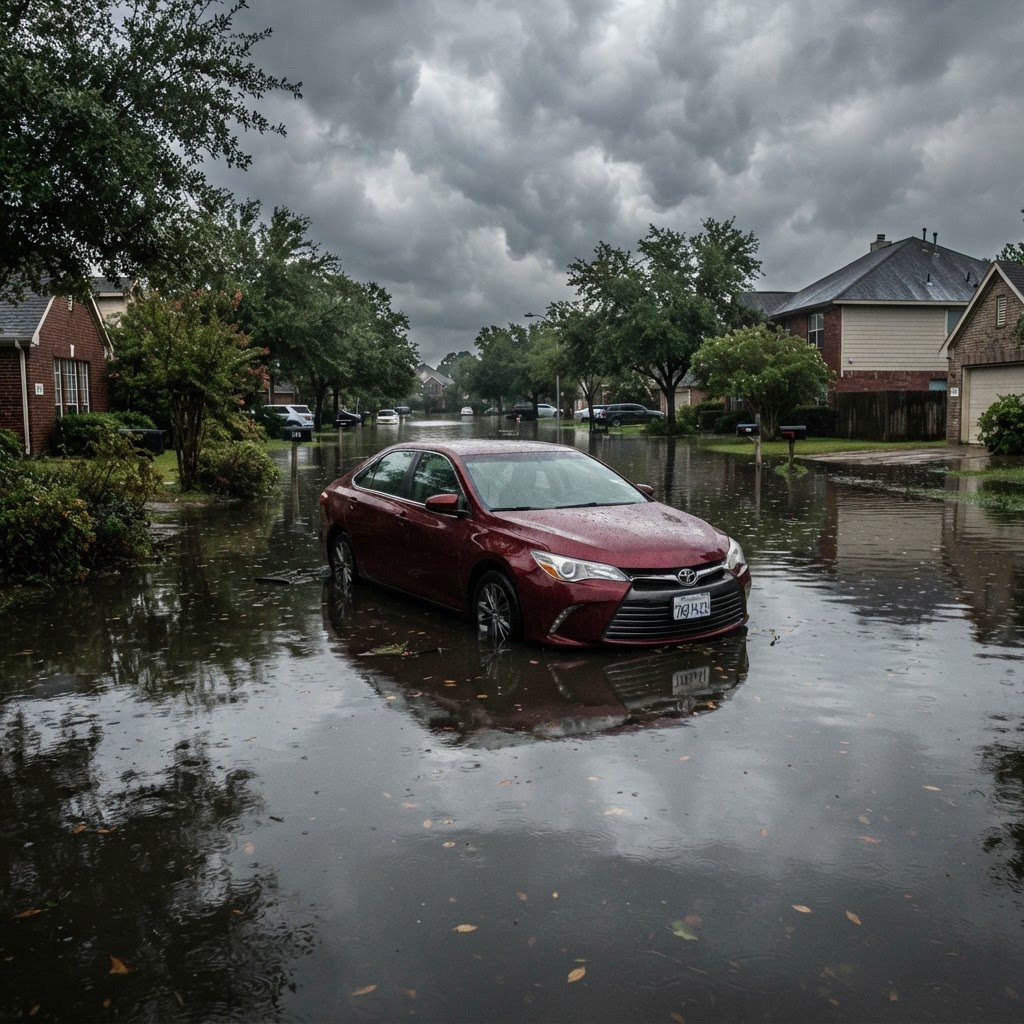
When a stalled storm system parks over the Clear Lake area, the water doesn't stay polite. League City's flat coastal topography means streets and driveways in low-lying neighborhoods flood first — and every flood event leaves a parking lot full of waterlogged cars in its wake.
If your vehicle took on water, you have a short window to make smart decisions. Here's what matters.
Need that broken-down car removed today from your League City driveway? Call or text (346) 443-4888 for guaranteed local pickup.
Call or Text NowSaltwater vs. Freshwater: Why the Distinction Matters
Freshwater flooding (rain-driven bayou overflow) is bad but sometimes survivable for a vehicle. Contaminated water ruins carpet and upholstery and is hard on mechanicals, but a quick-drained engine bay can occasionally be saved.
Saltwater intrusion — from storm surge or brackish bayou backflow in coastal neighborhoods — is almost always a death sentence for the electronics. Salt water is conductive and corrosive:
- It bridges traces on printed circuit boards immediately.
- It corrodes every connector it touches within days.
- It wicks into wiring harnesses and continues destroying them for months after the car "dries out."
⚠️ Warning: A flood car that starts and "seems fine" two weeks later is not fine. Corrosion inside connectors and modules progresses for months. Never assume a saltwater car is roadworthy because it started once.
The Hidden Damage: Electrical Corrosion
Modern vehicles have 30+ computer modules — engine, transmission, airbag, ABS, body control. Water above the floor line reaches many of them. The failure pattern is predictable: weird warnings first, then cascading module failures as corrosion spreads, then a car that runs one morning and doesn't the next.
Repair estimates on flooded electronics routinely exceed vehicle value, which is why insurers total most saltwater cars outright.
Texas Salvage Branding and Your Disclosure Duties
If an insurance company pays out on a flood-damaged vehicle, the title gets branded — typically flood or salvage — and that brand is permanent in the TxDMV record. Selling a branded vehicle without disclosing the brand, or selling an unbranded flood car you know took on water without disclosing the damage, can unwind the sale and expose you to fraud claims under Texas deceptive trade practice law.
The paper-trail rule: always disclose known flood damage in writing on the bill of sale, even when selling for parts or salvage.
Your Practical Options After Flood Damage
- Insurance settlement — if covered, comprehensive coverage generally handles flood; accept or negotiate the payout.
- Buyback and resell — you can often keep the vehicle by accepting a reduced payout, then sell it to a salvage buyer.
- Sell direct for salvage — no insurance claim needed; we purchase flood-damaged vehicles as-is, handle the flatbed removal, and pay cash on the spot.
FAQ
Q: Is a flood car worth anything? A: Yes — weight, converters, and salvageable parts all carry value. Heavier trucks and SUVs flooded in League City still bring solid salvage offers.
Q: Do I have to tell you it was flooded? A: Yes, and you should — it doesn't disqualify the sale. It does affect honest pricing, and disclosure protects you legally.
Q: Can I sell a flood car that still starts and drives? A: You can, and it's worth more than a dead one — but disclose the flood history to any buyer, salvage or private.