Trading In vs. Selling for Scrap: The Best Move for High-Mileage Clunkers
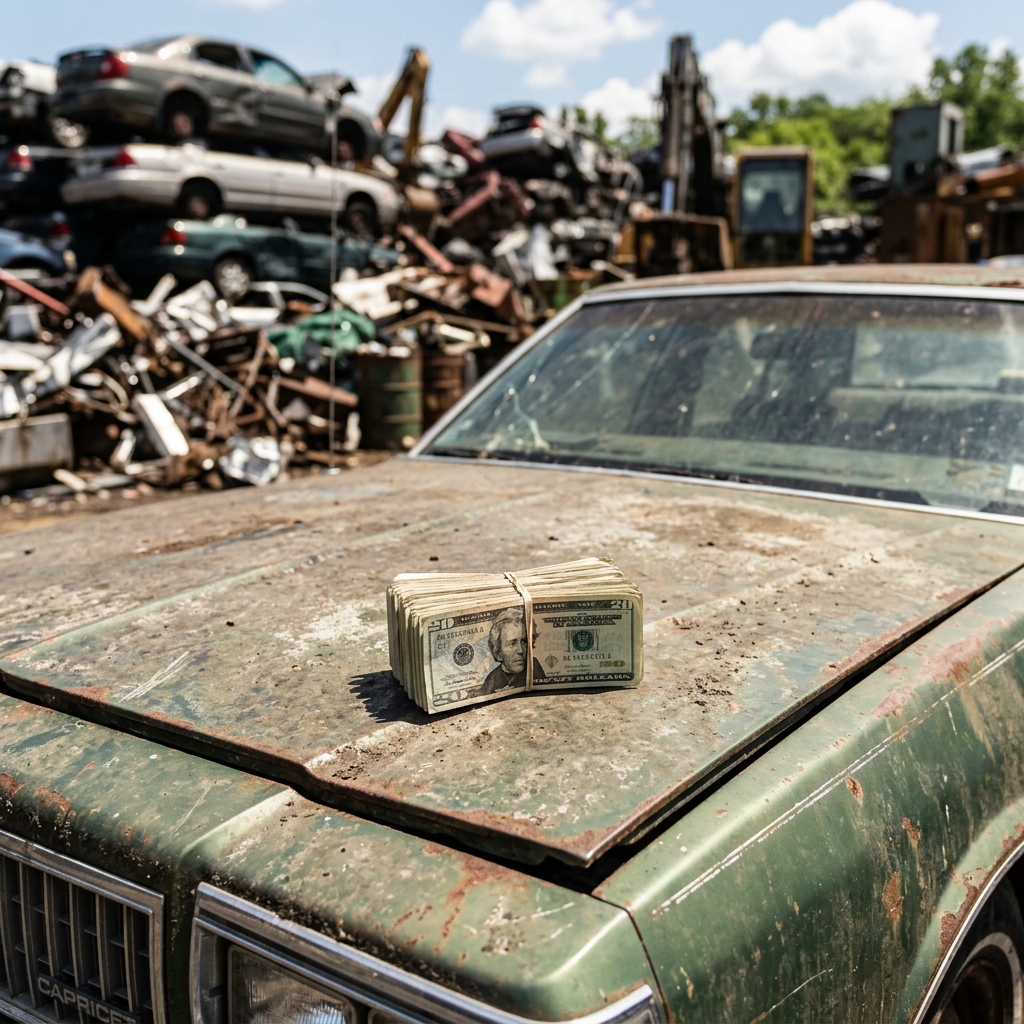
You finally accept it: the old car isn't worth fixing. The natural next thought is "I'll just trade it in" — but for a high-mileage clunker with a mechanical problem, the dealership route is almost always the worst-paying option in League City. Here's the honest math.
Why Dealers Near-Nothing a Mechanical Total
A dealership prices every trade-in the same way: estimated wholesale auction value minus reconditioning cost. On a 2005 sedan with a blown transmission:
Need that broken-down car removed today from your League City driveway? Call or text (346) 443-4888 for guaranteed local pickup.
Call or Text Now- Wholesale value at auction: already minimal.
- Reconditioning (transmission, tires, detailing): more than the car is worth.
- Result: the trade-in line on your paperwork reads $500 or less — sometimes literally $100.
Dealers aren't being cruel; a mechanical-total car genuinely costs them money to dispose of through wholesale channels. But that doesn't mean you should accept their math.
The Fees That Make It Worse
Trade-in "value" isn't cash. To realize it you have to buy another car, and that's where the trade-in allowance gets clawed back:
- Documentation fees — commonly $150–$400 per contract at Texas dealerships.
- Negotiation games — inflating the trade number while marking up the new car, or vice versa.
- Time cost — a full Saturday at the dealership to extract a number you could have gotten on the phone in ten minutes.
The Scrap Buyer Math
A local junk car buyer prices the same car completely differently — by weight, completeness, and parts value. That blown-transmission sedan still has a full engine, wiring, converter, and 2,800+ pounds of steel. A direct League City buyer pays for that, tows for free, and pays cash on the spot, no new-car purchase required.
⚠️ Warning: Never negotiate a trade-in by disclosing only monthly payment. If you mention a trade at all, keep the car's sale price and the trade number separate — or better, sell the clunker for cash first and walk into the dealership with no trade at all.
When a Trade-In Still Makes Sense
To be fair, trading in can be right when the vehicle is late-model, running, and cosmetically clean; the dealer is running a trade-in bonus promotion; or you simply value convenience over maximum dollars. But for a high-mileage vehicle with a dead transmission, a slipping clutch, or a blown engine — the clunker category — instant scrap cash wins nearly every time.
FAQ
Q: Can I really get more cash selling junk than trading in? A: For mechanical totals, yes — usually several hundred dollars more, and it's actual cash rather than an allowance.
Q: Should I fix the car first to raise the trade value? A: Almost never. Dealers price major repairs at wholesale rates; you'd pay retail to maybe recoup part of it.
Q: What if I still owe money on the clunker? A: A trade-in's payoff handling is simpler, but a scrap sale can also work if the loan is small — call us and we'll walk through the payoff details.